
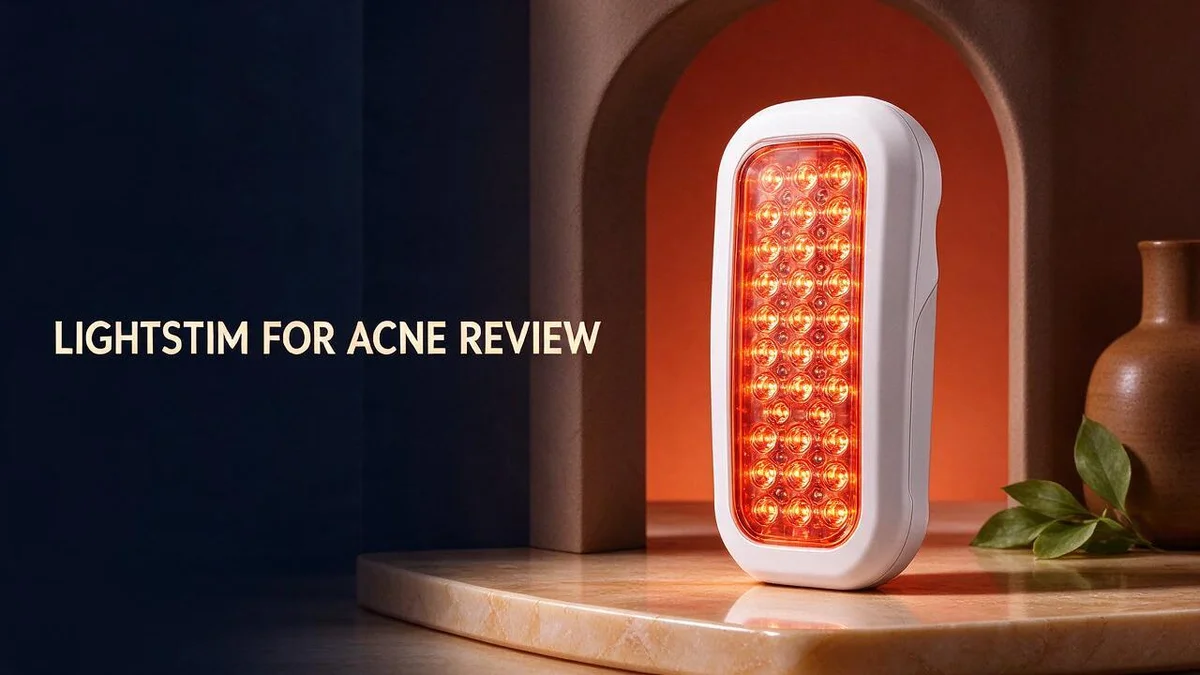
Acne can feel frustrating. Many people try creams, washes, and pills, yet breakouts keep coming back. Light therapy might offer a fresh option. Have you ever wondered if a small device could help clear your skin? The LightStim is a handheld device that uses light to fight acne at home.
It has 36 LEDs that release blue light at 415 nm and red light at 630 nm. The blue light targets P. acnes bacteria, while the red light helps calm irritated skin.
The device is cleared by the FDA for mild to moderate acne. Many users report visible improvement within two to four weeks. In this review, we look at how LightStim works, what it does well, and whether it deserves a place in your routine. Let’s take a closer look.
In a Nutshell
- Who it may suit: People with mild to moderate breakouts can add LightStim to a simple daily routine. It offers a treatment option that does not rely on pills or creams.
- How the light works: The blue light and red light target P. acnes bacteria and help calm irritated skin. This two light approach tackles acne from more than one angle.
- When to expect results: Visible improvement often appears within 2 to 4 weeks of regular use. Steady use matters most, so set a daily reminder to stay on track.
- What the research leaves out: Brightness levels and possible side effects are not stated. Read recent user feedback and ask a dermatologist before you start.
- Other red light options: Nicebeam, Omnilux Contour, EMR-TEK Firedragon, and Mito Red Light MitoPRO+ 300 offer similar light therapy. Compare their features to find your best fit.
- The bottom line: LightStim may help with mild to moderate acne when used with care. It works best as part of a complete skin care plan.
Light Technology and Wavelengths

- Advanced LED Acne Treatment at Home: FDA-cleared LightStim for Acne combines blue light therapy to target acne-causing bacteria and red light therapy to soothe and calm skin, promoting a visibly clearer complexion.
Last update on 2026-06-05 / Affiliate links / Images from Amazon Product Advertising API Some of the links on this website are affiliate links, which means that at no additional cost to you, I earn a commission if you click through and make a purchase. I only recommend products and services that I believe will add value to my readers. Thank you for your support!
Light is not just one thing. Every color sits at its own wavelength, and scientists measure that length in nanometers. Shorter wavelengths carry more energy, while longer wavelengths travel further into the skin.
Blue light sits at the shorter end of the visible range. Its energy works mainly on the upper layers of the skin. This is where acne bacteria often live, so blue light suits surface level breakouts.
Red light has a longer wavelength. It reaches deeper than blue light and moves into the dermis. Many people use red light to support the look of even, calm skin over time.
Using both colors together creates a wider reach. Blue light handles the surface while red light works below it. Think of the pair as a team, with each color covering a different layer of the skin.
Wavelength only helps when light reaches the skin. That means the device must sit close enough to the face during each session. Distance and timing both shape the final result.
Consistency matters just as much as color. Light exposure needs to happen on a regular schedule. Skipping sessions can slow down progress, so a simple routine helps most.
Some people feel mild warmth during a session. Any unusual feeling is a good reason to pause. Start with shorter sessions and watch how your skin responds before you increase the time.
Wavelength also explains why devices differ. A light built for acne targets the blue and red range. Other devices may use different colors for other skin goals, so match the light to your needs.
Knowing the science helps you set fair expectations. Light cannot replace a gentle cleanser or a dermatologist visit. It works best as one step in a wider skin plan.
Think about your own skin before you buy into any light device. Notice which layers seem most affected. Then pick the wavelength story that fits your daily habits and comfort.
Light based tools rely on exact settings. The color and length of each wave shape the outcome. Clear science gives you a stronger reason to stick with the routine.
Usage and Treatment Routine
Start with clean, dry skin. Wash your face and pat it dry before each session. Makeup, oil, and sunscreen can get in the way of the light.
Pick a regular time of day. Many people choose the morning or the evening. A fixed time makes the habit easier to keep.
Hold the device steady. Place the device close to your skin, as the instructions describe. Keep your eyes closed during each session. Move slowly across the areas where breakouts appear.
Focus on active breakouts. Spend more time on spots that look red or swollen. Keep sessions gentle on dry or irritated skin. Your skin needs room to recover.
Watch how your skin reacts. Stop right away if you feel pain or sharp discomfort. Mild warmth is normal for some people. Strong heat means you should pause and read the instructions again.
Build a simple weekly plan. Use LightStim on the same days each week. Add the days to a calendar or phone reminder. A written plan turns a good idea into a steady habit.
Track changes with photos. Take a photo of your face in the same light once a week. Compare the images after a month. Photos reveal small changes that are easy to miss in the mirror.
Support your results with simple habits. Use a light moisturizer after each session. Change your pillowcase often. Drink plenty of water and eat balanced meals.
Use other products with care. Avoid harsh scrubs on the same day. Choose gentle products your skin already tolerates. Adding too many new items at once can make it hard to see what works.
Plan for slow days. Some weeks feel busy. Even a quick session keeps your routine alive. Missing one day is not a failure. Simply return to your schedule and keep going.
Results Timeline and Effectiveness
Think of results as a timeline rather than a single finish line. The first days often feel like a trial period. Your skin may look about the same while you learn your routine.
Week one is mostly about adjusting. Some people notice that their skin feels calmer after a session. Patience matters more than speed at this stage.
Weeks two to four give you the first real checkpoint. Look at whether red and swollen spots fade faster than before. Notice whether new breakouts show up less often. Those patterns tell you more than a single good morning in the mirror.
After four weeks, the question changes. Ask whether your skin keeps improving or has stopped changing. A plateau is useful information. It may signal that your current plan needs a fresh look.
Effectiveness looks different for each person. One person may see fewer active spots first. Another may notice less redness or smoother texture. The research does not describe results for deep or cystic acne, so set your expectations with care.
FDA clearance means the device is cleared for mild to moderate acne. That label points to common breakouts rather than every skin concern. Treat it as one tool, not a guarantee.
A simple log helps you judge progress fairly. Write down the date, the number of active spots, and how your skin feels each week. Numbers are easier to compare than memory. Review your notes every seven days to spot the trend.
If you see no change after about four weeks of steady use, or if breakouts get worse, book a visit with a skin expert. They can review your routine and suggest next steps. That step protects your skin and your time. Small gains still count, even if they feel slow.
Honest tracking beats hopeful guessing. Give the device a fair trial, watch the pattern, and decide with clear facts. Your skin will show you what works.
Top 3 Alternatives
Tria Acne Clearing

- Acne Treatment Kit: For mild to severe acne, blackheads and whiteheads, this set eliminates breakouts with Benzoyl Peroxide for visibly clearer skin; Includes our Oil Free Acne Cleanser, Witch Hazel Mattifying Toner and Oil Free Acne Lotion

Last update on 2026-06-06 / Affiliate links / Images from Amazon Product Advertising API Some of the links on this website are affiliate links, which means that at no additional cost to you, I earn a commission if you click through and make a purchase. I only recommend products and services that I believe will add value to my readers. Thank you for your support!
Tria Acne Clearing is a handheld device that uses blue light to target bacteria that cause acne.
Many people like its small size. You can use it at home in just a few minutes each day. It works well for spot treatment on the forehead, cheeks, or jawline. Blue light is gentle on most skin types.
Neutrogena Light Therapy Mask

- RECHARGEABLE ACTIVATOR OR POWER PACK **WITHOUT 30 USE LIMIT**: Use it as many times as you want, whenever you want. You deserve to look good and feel good.
Last update on 2026-09-02 / Affiliate links / Images from Amazon Product Advertising API Some of the links on this website are affiliate links, which means that at no additional cost to you, I earn a commission if you click through and make a purchase. I only recommend products and services that I believe will add value to my readers. Thank you for your support!
The Neutrogena Light Therapy Mask is a wearable option that delivers blue and red light across the face.
The hands free design lets you relax or multitask during each session. Blue light helps fight acne causing bacteria, while red light may calm redness. Most sessions last about ten minutes. Consistency matters most, so use the mask on a regular schedule.
Proactiv Solution Kit

- THE ORIGINAL ACNE KIT THAT STARTED A SKINCARE REVOLUTION - Designed specifically for acne-prone skin, Proactiv Solution delivers finely-milled benzoyl peroxide deep into your pores to help stop acne-causing bacteria in its tracks and prevent breakouts.
Last update on 2026-06-02 / Affiliate links / Images from Amazon Product Advertising API Some of the links on this website are affiliate links, which means that at no additional cost to you, I earn a commission if you click through and make a purchase. I only recommend products and services that I believe will add value to my readers. Thank you for your support!
The Proactiv Solution Kit is a topical skincare system rather than a light device.
It includes cleansers and treatments that work together. Benzoyl peroxide and other active ingredients help clear pores and reduce oily buildup. Follow the steps in order, morning and night, for the best routine. Skin may feel dry at first, so add a gentle moisturizer if needed.
Each option suits a different routine, so pick the one that fits your needs.
Skin Types and Suitability
Your skin type shapes how well LightStim may suit you.
Oily skin often gains the most from a light routine. Extra oil can feed breakouts, so steady use may help keep pores calmer.
Combination skin also works well for many people. Breakouts often sit in the center of the face, so you can focus on that zone.
Dry skin needs a little extra attention. Watch for flaking or tightness after each session, and add moisture when needed.
Sensitive skin calls for a careful start. Test a small area first and watch it closely.
Patch testing helps you avoid surprises. Choose a spot on the jawline and check it over the next day.
Skin tone does not change the light itself. Dark spots left by breakouts can linger longer on deeper skin tones, so judge progress with patience.
Fair skin often shows redness more clearly. That makes it easier to notice calming changes over time.
Skin that breaks out often may need more patience. Note any redness that lingers after a session, so you can spot patterns.
Teens with occasional breakouts may find the routine easy to follow. Simple steps make the habit easier to keep.
Adults with breakouts along the jawline often notice a pattern. Hormonal changes can drive these flare-ups, so LightStim may suit adults who track their triggers.
Some medicines raise light sensitivity. Check your medicine list with a pharmacist before you start.
Skip areas with open cuts, raw patches, or fresh peeling. Light should only reach healthy skin.
Clean the device as the instructions describe. Each skin type reacts in its own way, so compare your notes instead of other people’s stories.
Good fit depends on your skin and your daily habits. Use these clues to decide whether LightStim belongs in your routine.
Design and Handling
The LightStim device is handheld. You hold it in one hand and move it across your skin. This simple shape helps many people feel in control during each session.
Inside the head, you find 36 LEDs. The device uses blue light at 415 nm and red light at 630 nm in one unit. You do not need separate lamps for each color.
Brightness is not stated in the research. This means you cannot compare the output with other devices using lumen numbers. Read the product details carefully before you decide.
Keep the light panel clean. Wipe the surface gently with a soft, dry cloth after each use. Dust or oil can block light, so a quick wipe keeps the lights clear.
Store the device in a dry place. Keep it away from heat and direct sunlight. A drawer or shelf works well for most homes.
Good positioning starts with a clear view. A mirror on a table lets you see your face while you work. You can then check that your cheeks, chin, and forehead all receive light.
A relaxed hand makes a big difference. Rest your elbow on the table if your arm feels tired. This habit helps you move the light slowly across each area.
Eye safety matters too. Follow the manual on eye protection, and never look straight into the lights. This habit protects your eyes during every session.
The research does not describe the power source or charging needs. Check the manual for battery or cable details. You will know what to expect before your first use.
Portability may appeal to some users. The handheld size makes it easy to move from room to room. Some people prefer this flexibility over a large fixed panel.
Overall, the design favors simple use. A compact body, a clear light panel, and an easy grip help you stay consistent. Good handling supports a fair trial of the device.
Pros and Cons
Pros
- It offers a home option for mild to moderate acne.
- Two light colors target acne from different angles.
- No needles, creams, or pills are needed to use it.
- It fits easily into a morning or evening routine.
- Its handheld shape lets you treat your face without extra tools.
Cons
- The research lists no clear drawbacks, so weigh the facts carefully.
- No side effects are listed in the research.
- Long-term results are not described in the research.
- It is not described for severe acne.
Who Should Buy It
LightStim suits adults with mild to moderate acne. The device carries FDA clearance for that range, which gives many shoppers confidence. It often appeals to people who want a home option between clinic visits.
People who prefer a light-based routine may find it appealing. Some people dislike heavy medication or strong chemicals. This device offers a different path to clearer skin.
Patience suits this buyer best. Visible improvement may take two to four weeks. People who expect instant results may feel disappointed, so set realistic goals before you start.
Consistency matters too. Regular sessions help the light work over time. Someone who can commit to steady use will get the most from it.
Anyone who enjoys tracking progress may like this approach. Take a photo once a week in the same lighting. Seeing small changes builds motivation during the first month.
Some people should speak with a doctor first. Those with painful, deep, or cystic breakouts often need professional care. A dermatologist can check your skin and confirm whether a light device fits your plan.
People already under dermatologist care should also start a conversation. Ask your doctor if light sessions can sit alongside your current treatments. This step keeps your plan safe and organized.
Teens and young adults with mild breakouts may consider it too. A parent or doctor should guide their use from the start.
Who should skip it? People hoping for quick fixes within a few days may feel let down. Clear expectations keep your routine steady and your mood positive.
The right buyer sets clear goals. If you have mild acne, enjoy simple routines, and can wait a few weeks, this device may suit you well. Start with a plan, track progress, and adjust as needed.
Final Verdict
LightStim for Acne earns a solid place in the conversation. It suits people who want a light-based option for mild to moderate breakouts. Many shoppers prefer this approach over harsh creams or strong pills.
Compared with other red light products, this device feels more focused. Full face masks, such as the Nicebeam Anti-Aging LED Mask, cover the whole face at once. A handheld tool lets you pick exact trouble spots. That focus can help when only a few areas need attention.
Larger panels serve different goals. The Nicebeam Full Body Red Light Therapy Bag and the Nicebeam Red Light Therapy Lamp with Stand work well for broader skin care. They suit whole body routines more than spot care for breakouts.
Set realistic expectations from the start. This tool supports a daily habit. It does not replace professional care for severe or deep breakouts. Anyone with painful cysts should talk with a dermatologist first.
Adults who enjoy a simple routine may gain the most. The process requires little effort once it becomes a habit. Keeping a short log of skin changes can also help you see progress over time.
The research lists no clear cons, but no product fits every person. Read real user reviews and compare notes with other options before you decide. With steady use and fair expectations, LightStim for Acne offers a practical, low-stress way to work on mild to moderate acne.
Frequently Asked Questions
Who should use LightStim for Acne?
It suits adults with mild to moderate acne. People with painful, deep, or cystic breakouts should speak with a doctor first. Anyone already under dermatologist care should check with their provider before starting.
Does LightStim work on every skin type?
The research does not describe results by skin type. Test the device on a small area first. Watch how your skin responds over several days before you use it across your whole face.
Can I keep my current skincare routine?
Many people keep their usual cleanser and moisturizer. The research does not cover mixing this device with other acne treatments. Ask a dermatologist before you add strong active ingredients alongside it.
How can I tell if it is working?
Look for changes over two to four weeks. Take a clear photo each week in the same light. This helps you spot small shifts that are easy to miss in the mirror.
Can LightStim replace a dermatologist?
No, it cannot. It offers a home option for mild to moderate acne. If your breakouts persist, worsen, or spread, a doctor can recommend the next step.

Hey there, I’m Evelyn Carson, the founder and author of Trendy Beauty Blog. I’m a beauty enthusiast with a passion for sharing the latest trends and products with the world.
